

Local Property Context
Planning Exterior Work in Maryland Heights
Maryland Heights is a city in St. Louis County with a distinctly mixed built environment: the city reports 23.42 square miles, 28,284 residents and more than 1,900 businesses, while its housing data shows that most homes were built between 1960 and 1999. That combination matters when planning a roof, siding or gutter project. A visual inspection should account for the age of the roof assembly, later additions, attached structures and drainage details rather than assuming every property has the same construction. Gray Summit Roofing can schedule an inspection from Pacific, with visit timing dependent on availability. Homeowners should still confirm the current project requirements with the City of Maryland Heights before work begins.
Project-Site Photos
Project-Site Documentation: Maryland Heights
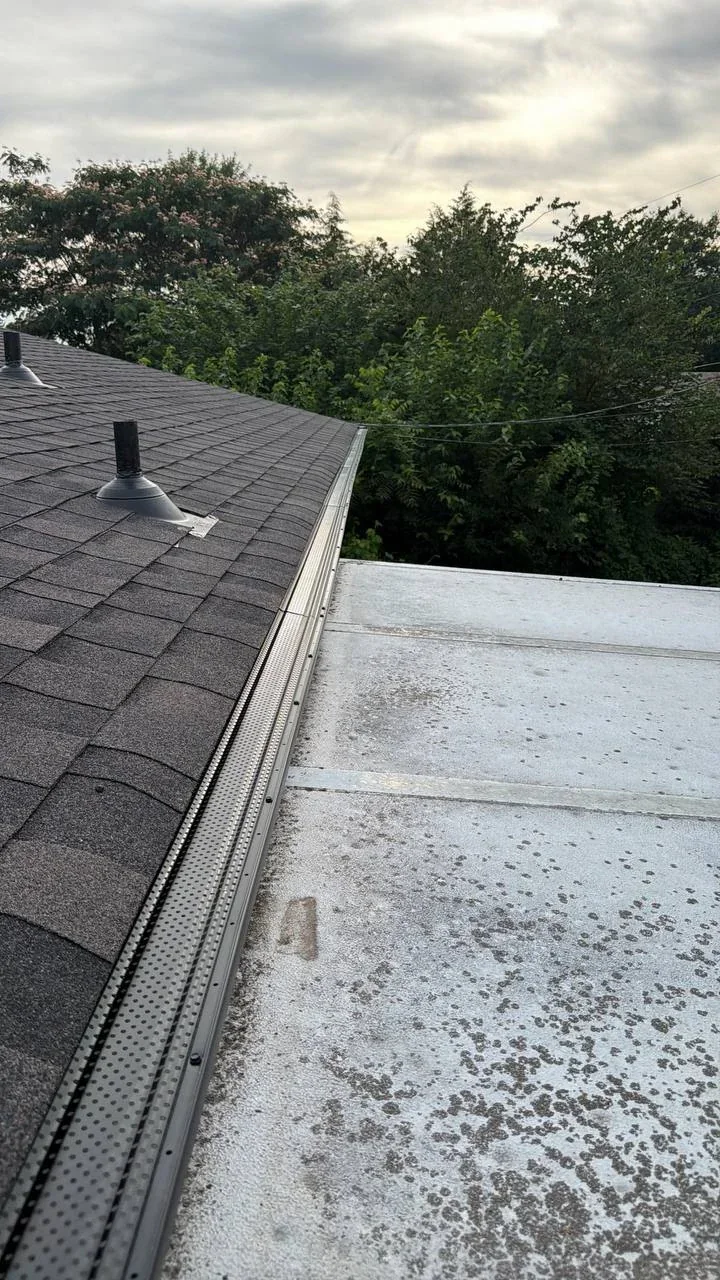
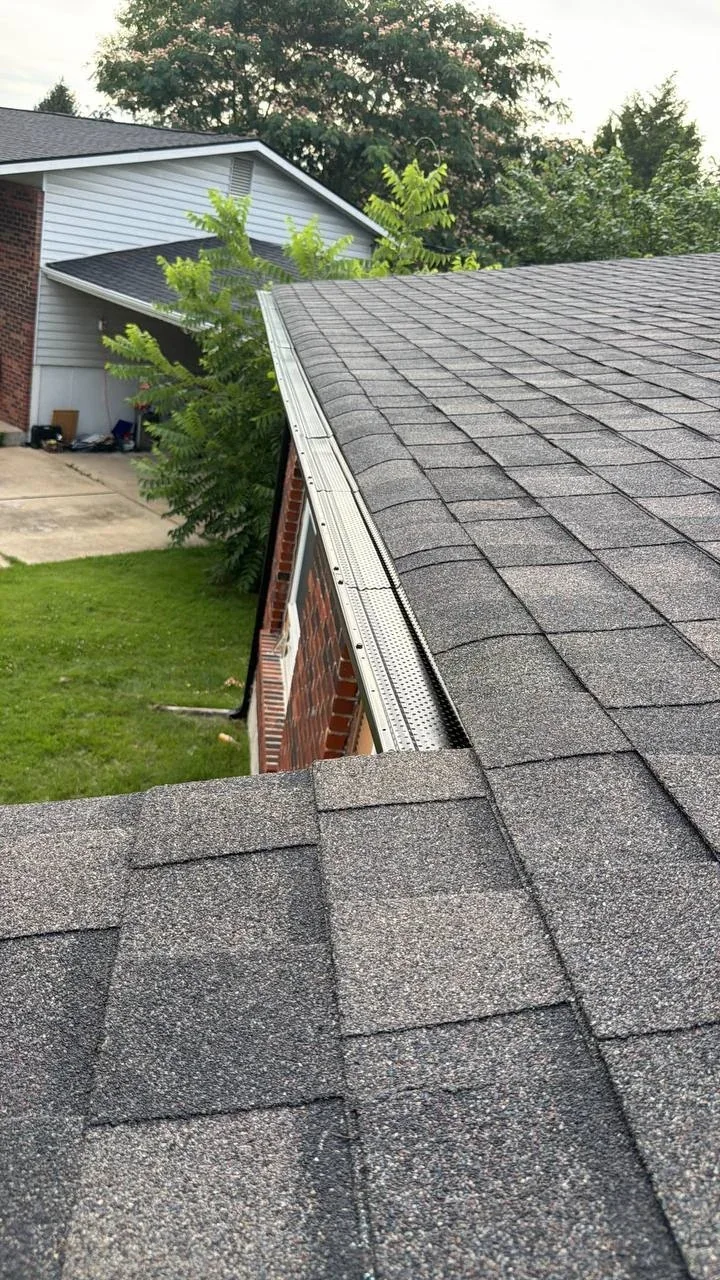
Photos document local project work, not a crew's current location. Ask our Pacific office about inspection and production scheduling.
Maryland Heights neighborhoods and housing context
The city’s official pages do not present a single citywide list of informal neighborhood names, so it is more accurate to describe Maryland Heights through documented residential developments and corridors. City project records identify Louiselle Park as a single-family subdivision, Parkside Estates as another single-family development, and Arbor Hills as a multifamily redevelopment. Those records show that local housing includes both established residential areas and newer or changing pockets, rather than one uniform subdivision pattern.
The city’s demographic page reports 13,343 housing units in 2020 and shows that 53.1% of housing structures were built from 1960 through 1979 and another 29.4% from 1980 through 1999. Those figures support an age-aware inspection approach, but they do not prove the age or condition of any individual home. Ask the inspector to document decking, flashing, ventilation, chimney or wall transitions, and gutter discharge paths instead of relying only on the visible shingle surface.
Corridors and development patterns that affect exterior work
Maryland Heights’ active-project listings show a strong employment and commercial pattern around Dorsett Road, Creve Coeur Mill Road, Route 141, Westport Plaza and River Valley Drive. The city lists office-flex, distribution, logistics, retail, hotel and multifamily projects in these areas, alongside single-family projects such as Louiselle Park and Parkside Estates. For a homeowner, the practical takeaway is not that every property shares commercial construction conditions. It is that a site-specific inspection should distinguish a detached house, townhouse or multifamily building from nearby commercial development and should verify who controls shared walls, roof areas, drains or access routes.
Work near a busy corridor may also require careful planning for material staging, driveway access and protection of landscaping, but the city pages do not establish a universal staging rule or neighborhood-wide construction schedule. Treat those items as property questions. Confirm access expectations with the contractor and, where applicable, with a property manager, condominium association or other owner representative.
Maryland Heights roof permit guidance
For property inside the incorporated City of Maryland Heights, the city’s Residential Roof Replacement page says a building permit is required for asphalt roof replacement when roof sheathing is being replaced and for other roofing types such as metal or TPO. The city also advises homeowners to submit an application when they are unsure whether sheathing will need replacement. Its residential permit page separately lists roof-sheathing replacement among projects requiring a building permit. These are the city’s published triggers, not a promise that every roof job has the same scope.
The same city guidance says Maryland Heights adopted the 2021 International Code Council family of codes, except that the International Energy Code remains 2015 as amended. The city’s page links to its adopting ordinance. Because code amendments and project facts can change, confirm the applicable edition, inspection sequence, fees and whether related siding, soffit, fascia, skylight or structural work changes the application before signing a contract. The city identifies online application options and provides phone contacts for permit and inspection questions.
Siding, gutters and drainage checks
A siding or gutter project should be reviewed as part of the whole exterior assembly. During an inspection, ask for observations about water-resistive layers, window and door flashing, corner transitions, soffit and fascia condition, downspout outlets, splashback and areas where roof runoff may be concentrating against the foundation. These are practical inspection topics, not Maryland Heights-specific code conclusions. The city’s published residential permit page identifies several exterior and structural projects that require permits, but it does not provide a blanket statement on every siding or gutter replacement. Ask the Building Division whether the exact scope requires a permit.
Gutter replacement can be straightforward when existing slopes and outlets remain workable, but a change in roof geometry, downspout routing, drainage discharge or fascia condition can expand the scope. Maryland Heights has an official floodplain-management resource within its Building Division navigation. If a property is near a drainage feature or the work changes grading, confirm whether a separate review is needed. Do not assume that a neighboring property’s approval, association preference or contractor recommendation applies to your parcel.
Who to contact before work starts
Maryland Heights’ Building Division is the first authority for a project located inside the city. The city says the division handles building permits and code enforcement, and its residential pages direct applicants to the city’s online permit process. Before work, provide the exact scope: roof covering only, sheathing replacement, metal or TPO roofing, siding, fascia, soffit, gutters, structural repair or related electrical and mechanical work. Ask which items are permit-triggering and what inspections must occur before concealment.
St. Louis County maintains a separate permits-and-applications procedure and an ACCELA portal for county permit records and applications. That county resource should not be read as proof that the County issues permits for an incorporated Maryland Heights home. Instead, use the address and municipal boundary to identify the correct authority. If a property is outside the city in unincorporated St. Louis County, County procedures may apply; if it is inside Maryland Heights, start with the city. St. Louis City is a separate independent city and is not the permitting authority for a Maryland Heights property.
Gray Summit Roofing’s inspection and estimate can help organize questions, but homeowners should obtain the permit answer from the actual authority and separately review any deed restrictions, condominium documents or HOA rules that apply to the specific property. An HOA approval is property-specific and is not a city permit.
Roofing & Exterior Services
Local Sources & Permit Contacts
The local guidance above draws on these public sources. Permit scope, adopted codes, historic review and association requirements can change; confirm the rules that apply to the actual property before signing a scope.