
Wind Damage to Your Roof in Kirkwood, MO: When to Call a Roofer
Call a roofer promptly after strong winds if you notice missing, lifted or creased shingles, exposed roof layers, displaced flashing, a branch on the roof or new indoor water stains. For wind damage roof repair in Kirkwood, MO, the priority is assessing the opening and arranging professional temporary protection before the next rain, not waiting for a leak to prove damage.
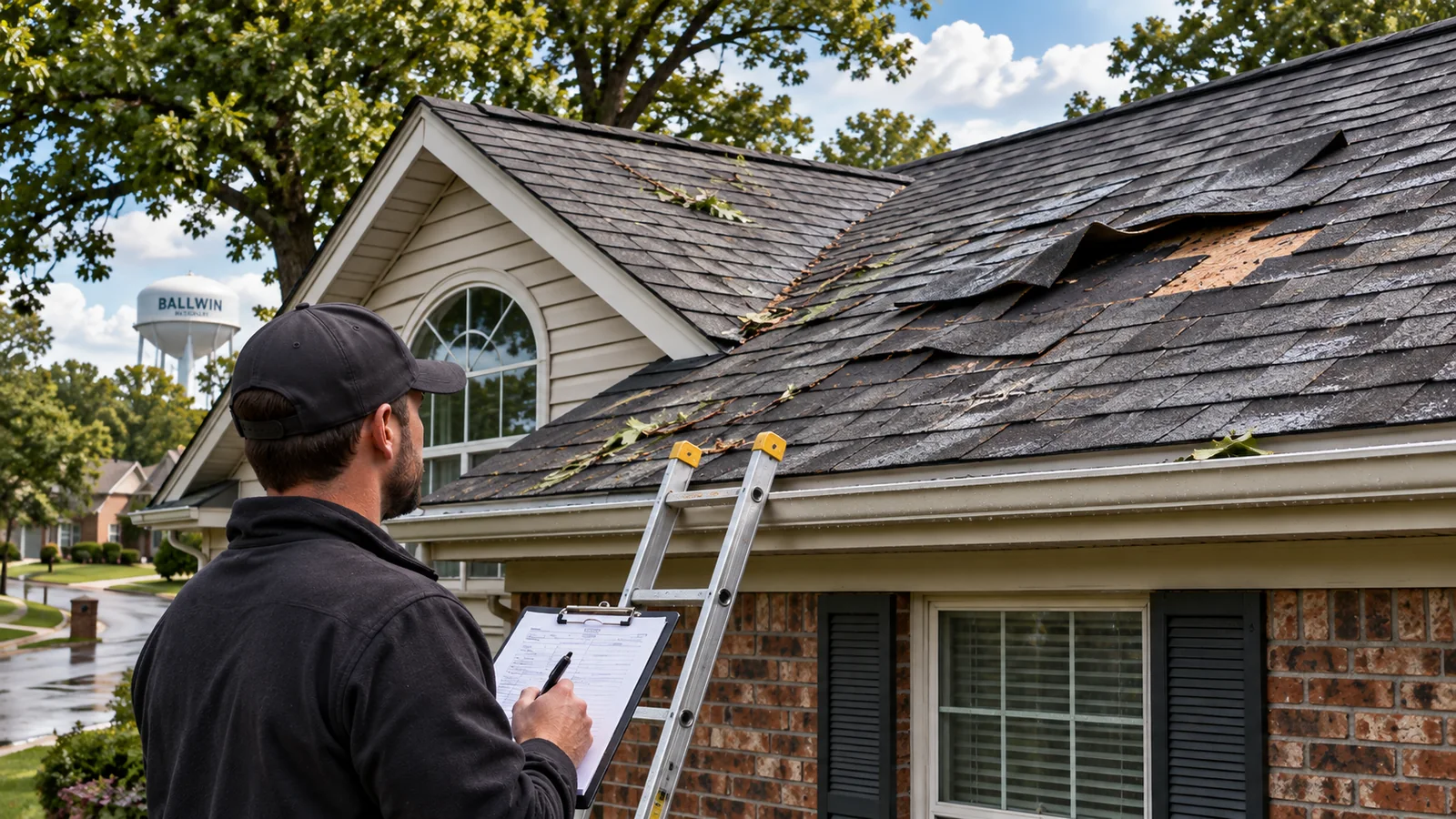
Stay off the roof and ladders. From a safe ground-level location, record what you can see and tell the roofer whether water is entering or rain is approaching. Shingles can remain in place even when wind has weakened their adhesive seals.
How wind uplift loosens shingles that still look attached
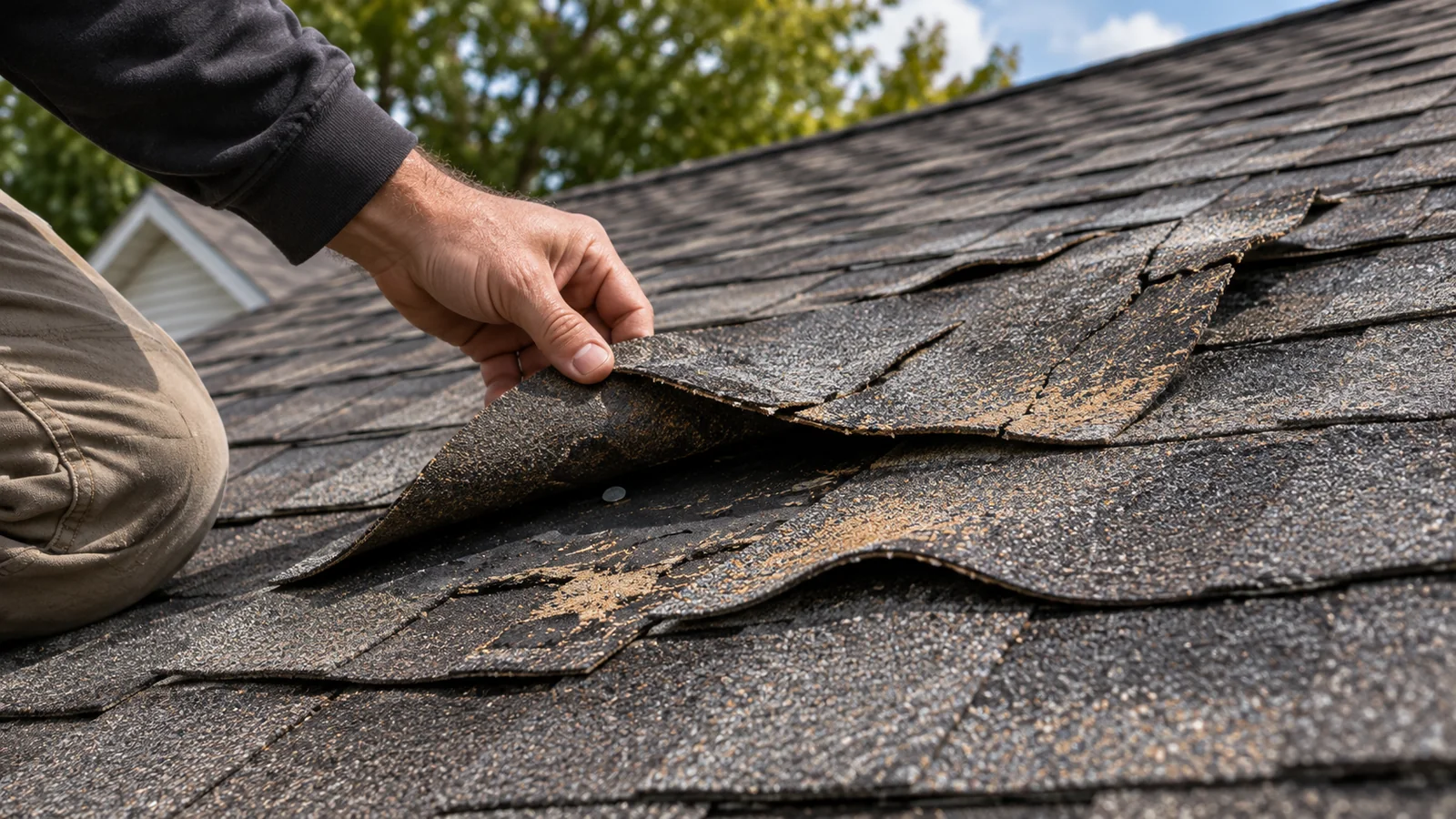
Wind uplift is the force that pulls roofing upward as air moves across it. Gusts can catch a shingle edge and loosen its bond to the shingle below. Once that edge lifts, the shingle may bend, crease, tear or blow away. A roof does not need to lose whole rows of shingles to need attention.
The Insurance Institute for Business & Home Safety's wind research identifies seal strength as the most important factor in high-wind performance for self-sealing asphalt shingles. Their factory-applied adhesive is temperature activated and bonds overlapping shingles together.
A loose seal alone does not establish when or why it failed. Installation conditions, aging and previous damage may also matter. A professional should assess the bond and surrounding materials rather than assume every unsealed tab resulted from the latest wind.
What to look for safely from the ground
Once hazardous weather has passed, use phone zoom or binoculars from a safe location. Do not move beneath hanging limbs or near fallen wires to get a better view. These observations help explain the problem when you call:
- Missing shingles: an irregular bare patch or pieces of roofing in the yard.
- Lifted or folded edges: shingles standing above adjacent courses or bent backward.
- Creases or tears: a visible fold line or split, even if the shingle lies flat again.
- Exposed underlayment: roof material showing where the outer shingle covering is gone.
- Displaced flashing or branches: bent metal near chimneys, walls or vents, or debris resting on the roof.
GAF's storm-damage guidance explains that uplift can crease shingles without removing them, and a fallen branch can conceal a crack. Photographs may show warning signs, but they cannot establish the full repair scope.
When protection before the next rain becomes urgent
Tell the roofer immediately about exposed layers, active dripping, an apparent puncture or flashing pulled away from a roof opening. Ask whether professional temporary covering is appropriate while permanent repairs are arranged. Exposed underlayment is not a reason to assume the roof can safely wait through another storm.
Kirkwood homeowners should consider straight-line winds, not just tornado reports. The National Weather Service St. Louis preparedness guidance notes that damaging straight-line winds are more common than tornadoes and can strike suddenly. Check the forecast for your address when discussing protection; a regional warning does not establish the wind speed or damage at your house.
Never install a tarp yourself or pull a branch off the roof. Professionals must evaluate access, weather and attachment methods. Temporary covering is not a permanent repair. If water reaches electrical fixtures, a ceiling bulges or structural damage is suspected, keep away from the area and seek appropriate emergency assistance. Do not handle wet electrical equipment.
Why no visible leak does not rule out hidden damage
A dry ceiling only tells you that no indoor leak is apparent at that moment. A broken seal, tear beneath an overlap or opening around flashing can be difficult to see from below. Trees or the roof's shape may also hide affected areas from a ground-level view.
A useful storm-damage inspection should document affected roof locations, shingle condition, accessible seal and fastening issues, flashing, and evidence of branch impact. Ask the roofer to explain what is confirmed, what remains uncertain and whether concealed layers need examination during repair. Interior stains and moisture observations should be recorded separately.
The report should distinguish damaged materials from unrelated wear instead of labeling every roof issue as storm damage. If water has appeared indoors, describe when it started and where it shows up. Our roof-leak repair guide explains why locating the entry point matters, rather than simply patching above a ceiling stain.
Preserve dated proof and follow your policy's claim process
The Missouri Department of Commerce and Insurance recommends documenting damage before cleanup or repairs, taking reasonable steps to prevent further loss and contacting your insurer or agent promptly. Do not delay safe temporary protection just to wait for an adjuster.
- Keep original photos and videos with their date information. Record when you first noticed damage and any water entry.
- Save earlier roof photos or maintenance records if available. They can help establish previous condition without proving causation by themselves.
- Request the roofer's inspection photos, findings and written estimate. Keep temporary-protection invoices and receipts.
- Contact your insurer or agent for reporting instructions, applicable deadlines and required documentation. Keep the claim number and a dated communication log.
Ask how permanent repairs should be coordinated with the insurer's inspection. Temporary expenses may be reimbursable depending on the policy; reimbursement is not guaranteed. The contractor documents and assesses construction damage. The insurer decides coverage under your policy. A roofing estimate is not a coverage decision or a promise of claim approval.
What a site-specific repair estimate should explain
A localized problem may be suitable for roof repair when surrounding materials can be worked on without unacceptable damage. Creased or torn shingles need assessment beyond simply pressing them flat. Any resealing should follow the applicable manufacturer's instructions, not an improvised adhesive fix.
Ask the estimate to identify affected areas, replacement materials, flashing work, temporary protection and how concealed damage would be handled. Cost drivers include roof access and pitch, damage extent, shingle availability, underlying deck condition and the work needed to restore weather protection.
Widespread damage or poor repairability may justify discussing roof replacement. That recommendation should be supported by documented condition, not by the assumption that insurance will purchase a new roof. Request a written scope before choosing the approach.
Homeowner Questions
Frequently asked questions
Can shingles have wind damage even if none blew off?
Yes. Wind may loosen an adhesive bond or crease a shingle that stays attached. Those conditions warrant professional assessment, especially before rain. An unsealed shingle alone does not prove that a particular storm caused it.
Will a lifted shingle seal itself again?
Do not rely on that. A roofer needs to check for creases, tears, contamination and the condition of the adhesive bond. Depending on the findings and manufacturer instructions, appropriate work may involve resealing or replacement. Do not test tabs yourself.
Is exposed underlayment safe until the next rain?
Do not treat it as a complete roof covering. Its condition and installation matter, and the missing shingles have removed an important protective layer. Call promptly and ask a professional whether temporary covering is needed before more rain arrives.
Should I remove a branch from the roof before inspection?
No. Leave roof-level removal to qualified professionals; the branch may conceal a puncture or shift unexpectedly. Stay clear of hanging limbs and wires. Photograph it only from a safe location and report its position when requesting help.
Should I wait for insurance before requesting temporary protection?
No. Report the loss promptly and ask your insurer about mitigation documentation, but do not let an exposed roof wait unnecessarily. Have professionals document temporary work and keep receipts. Whether those expenses are covered depends on your policy and the insurer's decision.
Helpful sources
Request a documented wind-damage inspection
Gray Summit Roofing LLC serves Greater St. Louis from 3132 W Osage St, Pacific, MO 63069. Call 314-886-1489 or request a documented inspection and written estimate for your Kirkwood roof. Mention any exposed areas, active leaks and approaching rain when you contact us.