
Roof Replacement Cost in Chesterfield, MO: What Homeowners Should Expect
Roof replacement cost in Chesterfield, MO depends on the roof's measured surface area, complexity, materials, installation conditions, and repairs uncovered during removal. A reliable answer comes from a documented inspection and an itemized written estimate—not your home's floor area or a generic online range.
The most useful comparison is whether competing proposals describe the same job. Before choosing a contractor for roof replacement, identify what each includes, what remains uncertain, and how additional work requires your approval. This guide helps you audit that scope rather than calculate a price from incomplete information.
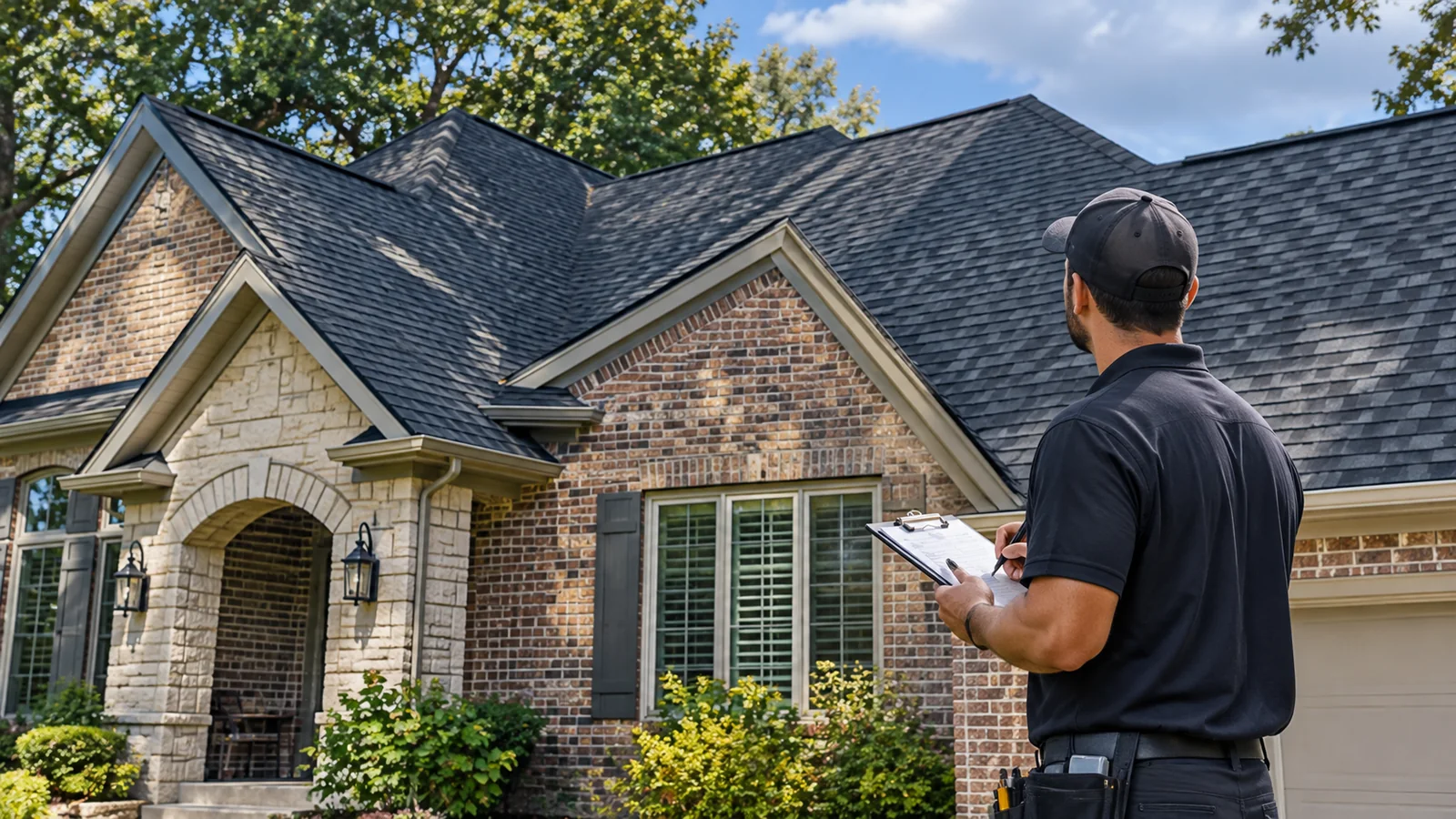
Start with roof area, not living-space square footage
Your home's floor area is not the area being reroofed. A second story adds living space without necessarily adding roof coverage; an attached garage, porch, and roof overhangs can add roofing beyond the living-space footprint. Sloped roof surfaces also differ from their flat, overhead outline.
Ask for the measured roof area and the method used to obtain it. The proposal should distinguish installed surface area from material ordered to allow for cuts and waste. Different ordering assumptions can explain a discrepancy without either roof measurement being wrong.
Then check geometry. Steeper slopes affect safe access and installation effort. Valleys, dormers, roof-to-wall intersections, and penetrations add cutting and flashing work. Ask which features were counted and how they affect the scope. Do not climb onto the roof to verify measurements; request the contractor's report and photographs.
Compare a specified roof system, not a shingle label
A proposal saying only 'architectural shingles' leaves important questions unanswered. Request the manufacturer, product line, and specified accessories. Material quality should be evaluated through product documentation and suitability for your roof, not a premium-sounding label. Our guide to Missouri roof shingle options can help frame those questions.
GAF's roof-replacement breakdown identifies components beyond shingles, including underlayment, drip edge, flashing, and ridge caps. Ask where leak barriers will be installed and whether starter shingles and pipe-penetration components are included.
In Greater St. Louis, wind and hail deserve consideration: the NWS St. Louis event archive documents both regional hazards. Ask about documented product ratings and installation requirements, without assuming a rating guarantees damage prevention or insurance savings.
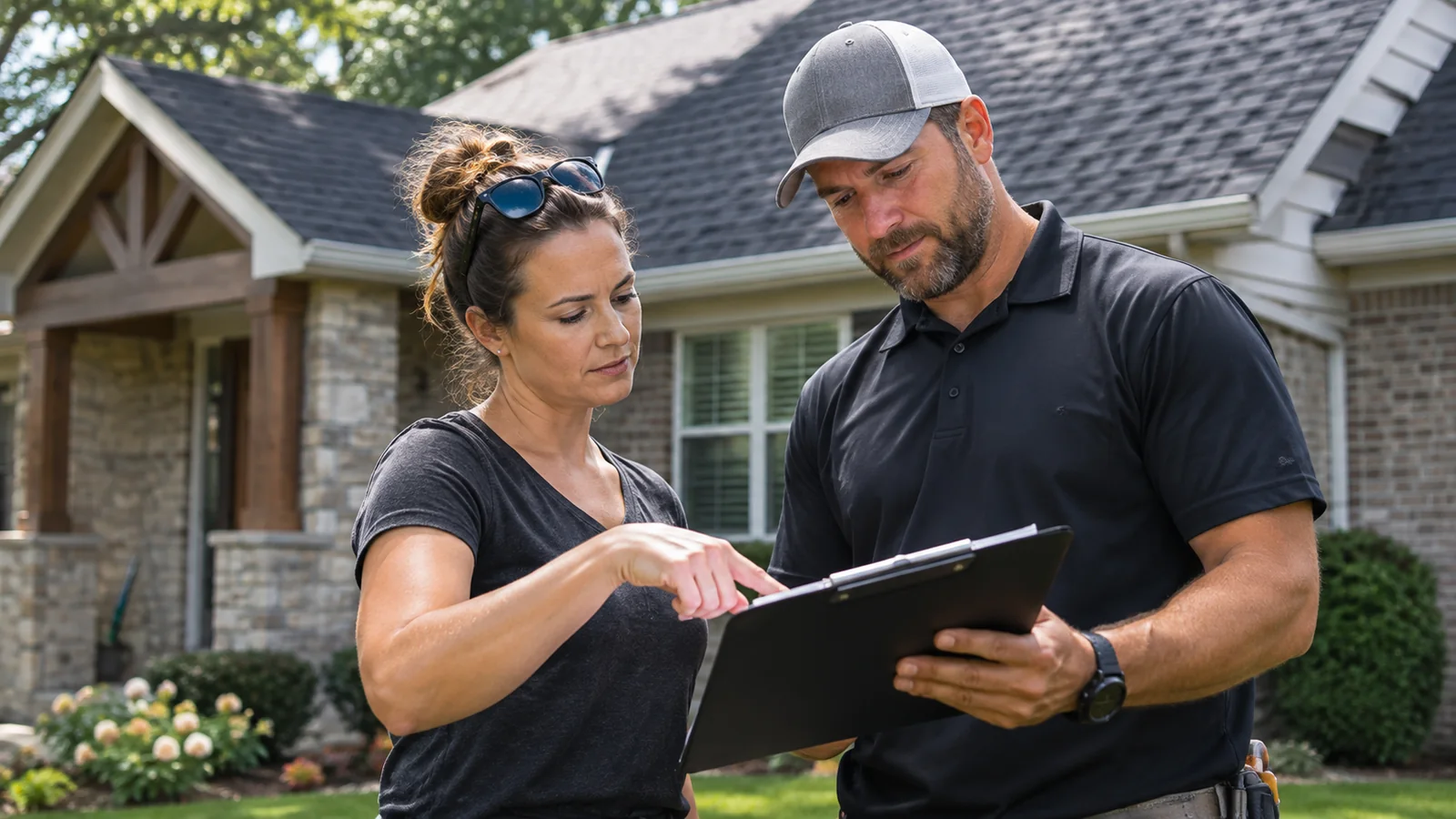
Make removal, labor, and site protection explicit
Two estimates can specify identical shingles yet assume different removal and installation work. The contract should identify whether existing roofing will be removed, how many layers the estimate assumes, and whether hauling and disposal are included. An additional concealed layer can change the work; ask how that discovery would be documented.
Access matters independently of roof size. Building height, steep slopes, limited equipment placement, and the route for carrying materials or debris can affect labor. Have the contractor explain the conditions observed at your property rather than accept an unexplained surcharge.
- Identify dumpster placement and protection for driveways, landscaping, and nearby property.
- Specify which flashing will be replaced, which may be reused, and the basis for reuse.
- Include debris removal, nail collection, and a final walkthrough.
Also clarify whether gutters, skylights, fascia, or interior repairs are excluded. 'Complete replacement' should not substitute for a written list.
Set a process for hidden decking before tear-off
Decking is the wood surface beneath the roof covering. An inspection may reveal warning signs, but shingles and underlayment can conceal its full condition. Once those layers are removed, deteriorated sections may need replacement to provide a suitable substrate.
A useful estimate separates known repairs from an allowance for uncertain work. Ask whether any decking replacement is included, what material is proposed, and how the extent of additional work will be measured.
The contract should explain the change-order process: photographs of the condition, the location and quantity of affected decking, the proposed repair, and written approval of the added scope and cost. Clarify how the contractor will protect the opened roof while awaiting a decision. A vague promise to 'fix bad wood as needed' is not an adequate comparison point. Uncertainty is normal; an undocumented authorization process is avoidable.
Audit ventilation and both warranty responsibilities
For a vented attic, replacing an exhaust vent is not the same as assessing airflow. GAF's balanced-ventilation guidance explains the relationship between lower intake and upper exhaust, using each vent's available open area. Ask for the basis of the proposed design and whether intake paths are usable. Simply adding more exhaust does not establish balance.
Have necessary ventilation work distinguished from optional upgrades and priced within the written scope. The contractor should assess the existing attic assembly before recommending changes.
Then separate warranties. A manufacturer's warranty addresses specified product defects; the contractor's workmanship warranty addresses covered installation errors. Some enhanced manufacturer warranties also include workmanship, but eligibility and coverage vary. Request the actual documents, not just a 'lifetime' description. Compare exclusions, registration requirements, transfer provisions, any reduction in coverage over time, and responsibility for labor, tear-off, and disposal. Neither warranty is a promise against every future leak or storm.
Resolve scope differences before choosing a quote
Read proposals side by side and mark each item as included, excluded, optional, or unresolved. Request written revisions where one contractor includes flashing or ventilation work another omits. This makes the comparison more useful than deciding which total looks lowest.
If suspected storm damage prompted the project, keep the construction estimate separate from coverage assumptions. Missouri DCI's severe-weather insurance guidance recommends contacting your insurer and cautions against permanent repairs before insurer inspection. A contractor can assess and document construction damage; the insurer decides coverage under your policy. Regional weather records alone do not establish damage at your address.
For storm-related roofing concerns, use professionals for temporary roof protection. Stay off the roof and away from water near electrical equipment. Ask about quote validity and exclusions before signing. If needed, discuss payment options subject to credit approval; financing does not resolve an incomplete construction scope.
Homeowner Questions
Frequently asked questions
Why do roof replacement quotes differ for the same Chesterfield home?
Contractors may use different roof measurements, waste assumptions, products, flashing plans, or removal allowances. One may include ventilation changes while another excludes them. Ask each to reconcile those items in writing before treating the difference as a difference in value.
Can I use my home's listed square footage to request an estimate?
You can share it as background, but it is not a reliable roofing quantity. Living space, roof footprint, and sloped surface area are different measurements. Request a roof-specific measurement that accounts for garages, porches, overhangs, and the actual roof geometry.
How should a quote handle decking that cannot be inspected yet?
It should identify any included allowance and explain how additional deterioration will be documented, measured, and approved. Request a written change order describing the affected area and proposed work, rather than accepting an open-ended authorization for concealed repairs.
Is a new ridge vent enough to address attic ventilation?
Not by itself. A vented attic needs suitable intake as well as exhaust, with usable airflow paths and a design appropriate to the assembly. Ask the contractor to explain the intake assessment and vent capacities behind the recommendation.
Does a storm-damage estimate mean insurance will pay for replacement?
No. A roofing estimate describes construction work; it does not determine policy coverage. Your insurer evaluates the claim. Keep inspection photographs and written findings, contact the insurer about required next steps, and arrange any dangerous temporary roof work through professionals.
Helpful sources
Request a documented inspection and written estimate
Gray Summit Roofing LLC serves Greater St. Louis from 3132 W Osage St, Pacific, MO 63069. For your Chesterfield roof, call 314-886-1489 or request an inspection and written estimate. Ask for a scope that clearly identifies materials, included work, exclusions, and the process for concealed conditions.