
Roof Repair vs. Roof Replacement in Eureka, MO: How to Decide
Choose roof repair when the problem is localized, its cause can be corrected, and the surrounding roof remains serviceable. Consider replacement when damage or deterioration is widespread, durable repairs are impractical, or repeated work no longer makes sense. The decision about roof repair vs. replacement in Eureka, MO should rest on documented condition—not age alone or a quick look at missing shingles.
A useful inspection explains what failed, where it failed, and what each option would leave unresolved. That lets you compare construction decisions before weighing estimates or asking your insurer about coverage.
Roof age is context, not a replacement deadline
Installation age helps establish the roof's history, but it cannot tell you how much useful life remains. GAF explains that asphalt shingles have no fixed expiration date; weather, moisture, materials and other conditions affect their performance.
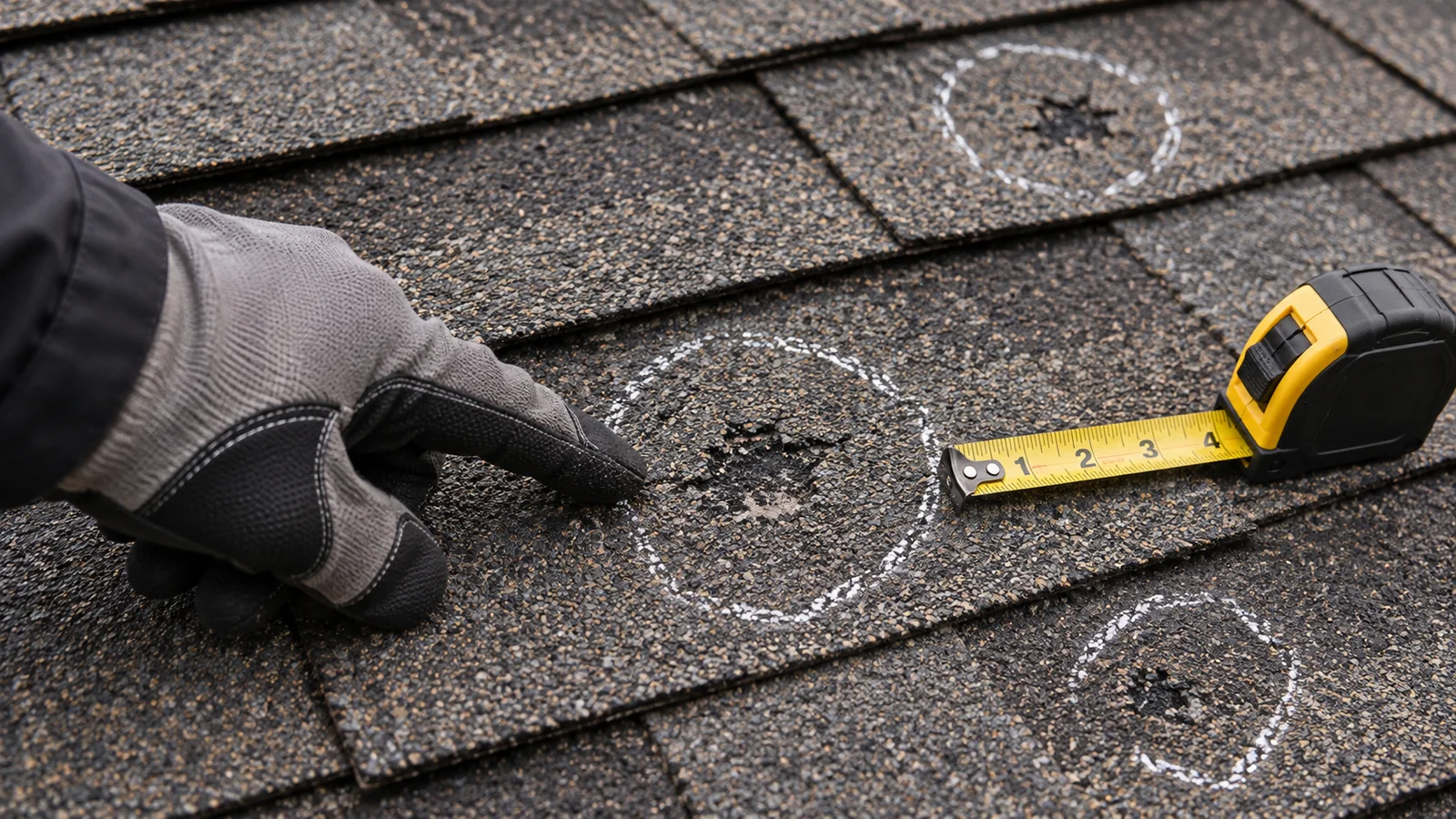
Ask the inspector to distinguish isolated defects from broader deterioration. Curling, cracking and excessive granule loss with bare patches warrant assessment. A few loose granules alone are not a replacement verdict. A relatively recent roof can still need substantial correction if construction defects or damage are extensive.
Remaining service life is an assessment, not a promise. Ask what observed conditions support the recommendation and how much confidence the contractor has that the untouched roof can remain serviceable after a repair. Old invoices and previous inspection photographs can help establish that history.
Map the damage before choosing the scope
The location and distribution of damage matter as much as its appearance. One failed penetration or a limited group of damaged shingles presents a different decision from defects across several roof slopes. GAF's repair-versus-replacement guidance identifies localized damage as a possible repair case and widespread problems as a reason to consider replacement.
For Eureka homeowners, the NWS St. Louis weather-event archive provides regional context for hail and damaging winds. It does not establish that your property sustained damage. An inspection should connect the recommendation to actual roof findings, rather than infer a full replacement from a nearby storm report.
Ask whether damage is confined to a detail, one slope or multiple slopes. For a proposed roof repair, request confirmation that suitable replacement materials are available and can be integrated properly. Ask whether surrounding shingles can be worked on without additional breakage. Appearance matching and construction compatibility are separate questions; a color difference alone is not proof of system failure.
Recurring leaks require a cause—not another patch
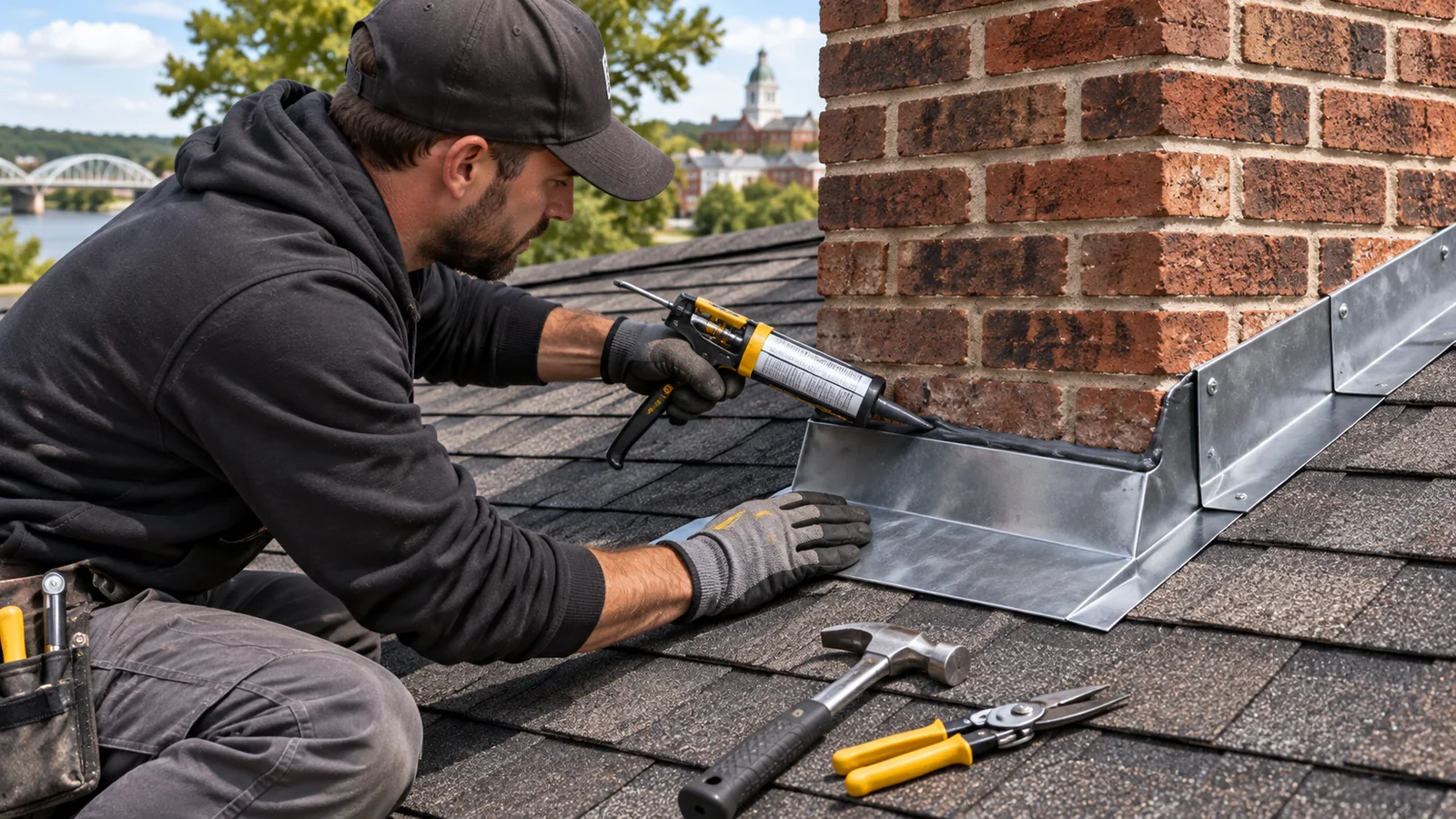
A leak returning after repairs deserves a fresh diagnosis. It may mean the original cause was missed, the repair was incomplete, or another defect exists. Recurrence alone does not prove the entire roof needs replacement. Bring prior repair invoices and note when and where water appeared.
The written findings should address flashing—the material that manages water at roof joints and penetrations—and the decking beneath the roof covering. Ask which areas were visible, whether deterioration was found, and what remains uncertain until roofing is removed. A new shingle surface is not a complete answer if a failed detail is left in place.
Include accessible attic observations and an assessment of intake and exhaust ventilation. If ventilation work is recommended, ask what condition it addresses and whether it belongs in either repair or replacement scope. Ventilation changes should not be presented as a substitute for repairing a confirmed water-entry point.
Two hypothetical roofs, two different decisions
Hypothetical localized problem: repair may be reasonable
An inspection traces a leak to one deteriorated vent flashing. The nearby shingles remain workable, compatible materials are available, and the inspected surrounding roof shows no widespread deterioration. A repair proposal explains how the flashing will be corrected and identifies any concealed decking uncertainty. Here, correcting the verified defect may be more proportionate than replacing serviceable roofing.
Hypothetical widespread deterioration: compare replacement
Another inspection records cracking and bare patches across several slopes, repeated leaks at different locations, and surrounding shingles that cannot be disturbed reliably for isolated repairs. A roof replacement proposal may address the broader condition more coherently. It should still specify decking assessment, flashing work and ventilation review—not simply offer new shingles.
These examples are hypothetical, not Gray Summit Roofing project claims. The deciding evidence is the condition and repairability of each roof.
Get a written inspection that supports the decision
Request a report you can use to compare scopes, not just a verbal recommendation. It should include:
- Photographs tied to roof locations and a description of observed defects.
- The likely leak source and distinctions between isolated damage and general deterioration.
- Repair feasibility, material availability and limitations of the inspected areas.
- Work included, work excluded and how concealed damage would be handled.
If storm damage may be involved, Missouri DCI recommends documenting damage, preventing further loss and contacting your insurer promptly. Keep repair receipts and review your policy. The contractor assesses and documents construction damage; the insurer determines coverage under the policy. A replacement recommendation does not guarantee claim approval.
Observe only from safe ground-level locations. NRCA advises homeowners not to climb onto roofs or attempt repairs. Leave temporary roof tarps to qualified professionals. Stay away from wet electrical equipment and areas beneath a sagging ceiling; seek appropriate professional help.
Compare long-term value using the same assumptions
A repair may have a smaller immediate scope, but ask what it leaves behind. Does it resolve the cause, or only defer broader work? Conversely, a replacement needs a clear explanation of why preserving the existing roof is impractical. Neither option is automatically the better value.
Site-specific estimates should account for roof measurements, pitch, access, material selection, tear-off, disposal, flashing details, decking findings and ventilation work. Compare the same included tasks and clearly stated unknowns. Our St. Louis roof replacement cost guide explains the drivers to discuss rather than substituting a generic price for an inspection.
Ask what performance and workmanship commitments are provided in writing. Consider your ownership plans, but do not assume replacement guarantees a particular resale return. The strongest decision is the scope that addresses documented conditions with understandable limitations.
Homeowner Questions
Frequently asked questions
Does an older roof automatically need replacement?
No. Age helps frame an inspection, but condition and repairability drive the recommendation. Ask for photographs showing whether deterioration is isolated or widespread and an explanation of why the remaining roof can—or cannot—support a durable repair.
Can one damaged roof slope be replaced instead of the whole roof?
It may be an option. Ask the contractor to assess the untouched slopes, transitions between old and new roofing, and material compatibility. Obtain a written explanation of appearance differences and construction limitations before selecting a partial scope.
Do repeated leaks prove that replacement is necessary?
No. Repeated leaks call for a diagnosis that accounts for earlier repairs. A correctable flashing defect may still support repair; separate leaks combined with widespread deterioration may support replacement. The report should explain which situation the evidence indicates.
What if replacement shingles do not match my existing roof?
Ask separately about visual matching and technical compatibility. The estimate should explain available materials, installation requirements and any repair limitations. A roofer cannot determine insurance coverage for matching; direct that policy question to your insurer.
What should I do while waiting for a roof inspection?
Record leak timing and photograph visible damage only from safe locations. Do not climb the roof or install a tarp yourself. Keep away from electrical equipment affected by water and unstable ceilings, and arrange professional mitigation when needed.
Helpful sources
Request a documented roof inspection in Eureka
Ask Gray Summit Roofing LLC for a documented inspection and written estimate that explain your repair and replacement options. Based at 3132 W Osage St, Pacific, MO 63069, we serve Greater St. Louis. Call 314-886-1489 or contact us to discuss your roof.