
Roof Leaking After Heavy Rain in Wildwood, MO? Repair or Replace?
A roof leaking after heavy rain does not automatically need replacement. A damaged flashing connection, pipe boot, or small shingle area may be repairable when the surrounding roof is sound. Replacement becomes more reasonable when inspection finds widespread deterioration, repeated failures, or damage that a localized repair cannot address reliably.
Before choosing roof leak repair in Wildwood, MO, protect people and belongings, document what you can safely see, and arrange a professional inspection. The immediate goal is to limit further water entry; the longer-term decision depends on the leak's actual source and the condition of the roof system.
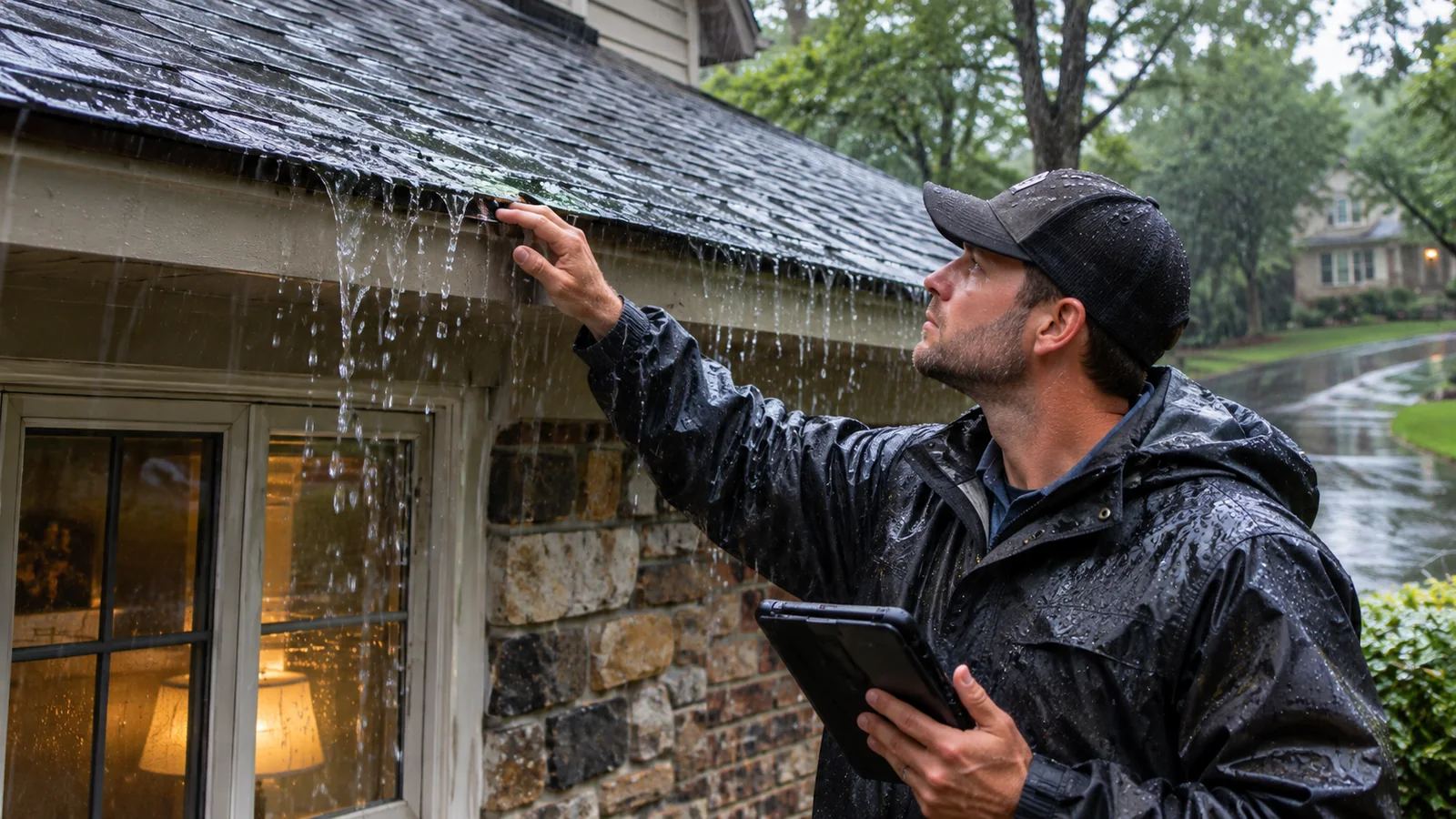
Start with safety, not a ladder
Move furniture, electronics, and valuables out of the affected area only if you can reach them safely. Place a container under an ordinary drip if the ceiling above is stable and there is no electrical hazard. Keep children and pets away.
Leave the area beneath a sagging or bulging ceiling. Do not stand under it, poke a drainage hole, or try to remove wet drywall. Water near a light fixture, outlet, appliance, or electrical panel also changes the response: do not touch wet equipment, switches, or wiring. Seek qualified electrical help; call emergency services for immediate danger such as sparking or signs of collapse.
For Wildwood homeowners, the NWS St. Louis forecast and warning page is a useful local starting point before any outdoor observation. Stay indoors while thunder, lightning, strong winds, or other hazardous conditions continue. Never climb onto a wet roof or use a ladder to investigate a leak.
Record the leak's timing and location
From a safe place, photograph the stain or drip and take a wider image showing its location in the room. Note when it started, whether it occurred only during heavier rain, and whether it continued after rainfall stopped. Tell the roofer about previous leaks or repairs in the same area. These observations guide inspection; they do not prove a cause.
After weather hazards have passed, observe from the ground. Look for missing shingles, fallen branches, loose-looking metal around a chimney, or overflowing gutters. Use binoculars or a phone zoom rather than climbing. A roof that looks normal from below can still have a failed detail.
Attic observation is optional, not an assignment. Only look if existing access, lighting, and secure flooring make it safe and there are no wet electrics, structural concerns, or other hazards. Stay on the established walkway; never step on insulation or ceiling drywall. Otherwise, leave the attic inspection to the professional. Do not enter a tight attic during the storm to chase a drip.
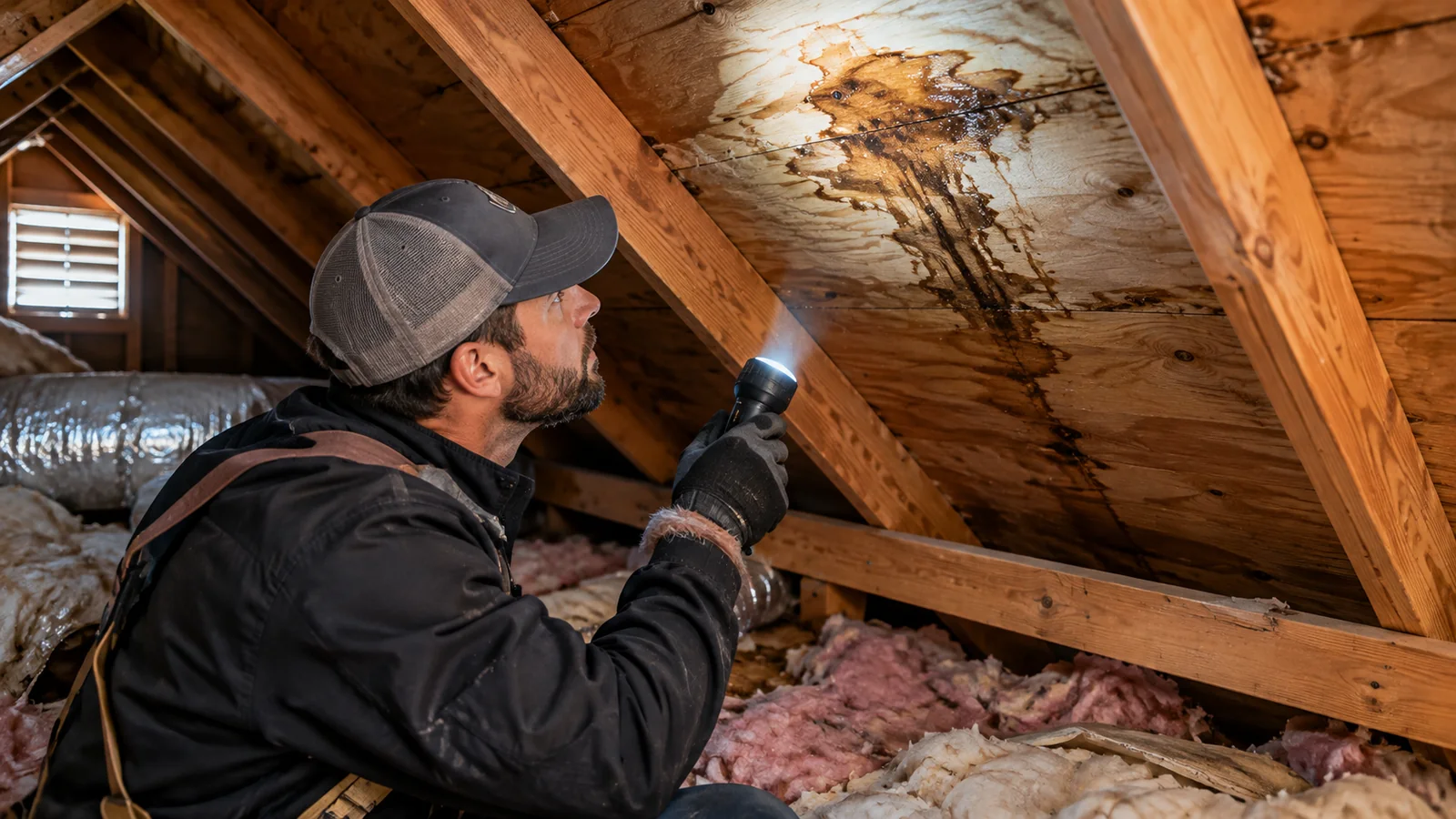
Why the ceiling stain may not mark the roof opening
Water can travel along roof framing or other surfaces before it becomes visible indoors. As GAF's leak-detection guidance explains, the source may be far from the visible damage. Replacing shingles directly above a stain without tracing the water path can miss the problem.
A documented inspection should consider several routes:
- Flashing: the protective material at roof-to-wall connections, chimneys, and skylights may be loose, deteriorated, or installed incorrectly.
- Shingles: missing, cracked, or lifted material and installation defects can expose vulnerable areas.
- Penetrations: boots and flashing around vent pipes and other roof openings can deteriorate.
- Drainage: gutter clogs can redirect water beneath roofing; debris in valleys can interfere with runoff.
Heavy rain may reveal an existing weakness rather than establish that a storm created new damage. The inspection should also consider plumbing or attic condensation if the evidence does not fit rain entry. Our roof repair service is the relevant starting point for evaluating a suspected localized defect.
Separate temporary protection from a permanent fix
If water is still entering, ask the contractor whether temporary protection is needed before permanent work. Depending on the damage and safe access, professional mitigation might involve a secured covering or a temporary repair at the opening. Homeowners should never attempt roof tarping or dangerous storm-time repairs.
A temporary measure is not proof that the leak is permanently resolved. Ask what it protects, what remains exposed, and when the permanent scope can be assessed. Weather and site conditions affect safe scheduling. If wind or impact damage is suspected, a storm-damage assessment can document construction findings without promising insurance coverage.
Choose repair or replacement from the findings
The National Roofing Contractors Association's homeowner guidance confirms that loose flashing or damage to one section can cause a leak without requiring complete replacement. A targeted repair makes sense when the contractor can identify the entry, restore the affected detail correctly, and connect the repair to sound surrounding material.
Replacement deserves closer consideration when shingles are deteriorated across the roof, several areas have failed, or installation problems extend beyond one detail. Roof age helps inform the assessment, but age alone does not locate a leak. Wet insulation or damaged decking also needs evaluation; the extent matters, not simply whether moisture is present.
Ask the roofer to show photographs explaining why a repair is feasible or why it would leave significant problems unresolved. If roof replacement is recommended, request a scope that addresses flashing, underlayment, decking findings, and drainage details—not only new shingles. Neither fresh interior paint nor a surface sealant patch substitutes for correcting the entry point.
Request a written scope and keep the damage record
A useful estimate identifies the suspected cause, proposed work, materials, and whether interior drying or restoration is included. Current cost drivers include roof access and steepness, the number of affected details, material availability, flashing complexity, and concealed decking damage. Ask how additional damage found during work will be documented and authorized. A stain photograph alone cannot establish a site-specific price.
The Missouri Department of Commerce and Insurance recommends safe damage documentation, reasonable steps to prevent further loss, keeping temporary-repair receipts, and promptly contacting the insurer or agent. Preserve before-and-after photos when safe. The roofing contractor assesses and documents construction damage; the insurer decides coverage under your policy.
Once entry is corrected, address wet materials and confirm appropriate drying before cosmetic repairs. For follow-up upkeep, our roof maintenance guide covers the broader inspection routine.
Homeowner Questions
Frequently asked questions
Can I wait if the dripping stopped when the rain ended?
Stopped dripping does not mean the opening is repaired or hidden materials are dry. Arrange an inspection and note the timing. Keep people away from any unstable ceiling or electrical hazard, even after the rain stops.
Does a leak during heavy rain prove storm damage?
No. Rain can expose aged flashing, an installation defect, or a drainage problem as well as recent damage. Document when you noticed it. A contractor can assess physical evidence; your insurer evaluates any claim under the policy.
Should I put a tarp on the roof myself?
No. Stay off the roof and do not attempt ladder-based tarping. Ask a roofing professional about safe temporary protection. Indoors, protect belongings or catch a drip only where the ceiling is stable and electrical hazards are absent.
Why is water appearing away from the damaged shingles?
Water may travel along framing before reaching the ceiling. The visible stain is a clue, not a reliable map of the roof opening. Give the roofer both the interior location and any ground-level observations so the water path can be traced.
What should a repair recommendation explain?
It should identify the likely entry point, the repair method, and the surrounding roof condition. Ask whether flashing or decking work is included and whether hidden damage could change the scope. A replacement recommendation should explain why localized work would be insufficient.
Helpful sources
Get the leak documented before deciding on a new roof
Gray Summit Roofing LLC serves Greater St. Louis from 3132 W Osage St, Pacific, MO 63069. For a leaking roof in Wildwood, call 314-886-1489 or request a documented inspection and written estimate. Share when the leak began, any safe photos, and whether water is still entering so the next steps can be discussed.