
Roof Insurance Claim Denied in St. Charles, MO? What You Can Do
If your roof insurance claim was denied in St. Charles, MO, start by obtaining the written reason, reviewing the cited policy language and gathering dated evidence that addresses the insurer's findings. Ask for clarification or reinspection when something was missed. If the response remains unsatisfactory, Missouri's insurance complaint process may help, but it does not guarantee a reversal.
A roofing contractor can assess construction damage and prepare documentation. The insurer decides coverage. Gray Summit Roofing does not interpret insurance policies, act as your public adjuster or provide legal advice.

Identify what the denial actually says
Before ordering another inspection, identify the issue you need to address. A statement that the roof needs work is not, by itself, evidence that the claimed loss is covered.
- Policy exclusion: The insurer cites language excluding a cause or category of damage. Ask it to identify the exact provision and explain its application.
- Wear or deterioration: The insurer attributes conditions to aging or maintenance rather than the reported event. A useful inspection distinguishes observed deterioration from separately observed damage without assuming either proves coverage.
- Cause dispute: Damage is acknowledged, but the insurer attributes it to another cause or an earlier event. The response needs a documented timeline and technical findings.
- Insufficient evidence: The insurer says the submitted material does not establish damage, timing or extent. Ask which information is missing rather than resending the same photographs.
Also distinguish a coverage denial from a determination that the accepted repair scope falls below your deductible. These are different issues. Ask the insurer which determination it made and request the supporting explanation.
Review the written decision alongside your policy
Missouri's Post-Disaster Claims Guide recommends requesting a denial in writing and keeping the paperwork. Save the letter, claim number, adjuster's findings and any estimate or inspection report the insurer provides.
Use the policy in effect on the reported loss date, including its declarations page and endorsements that modify coverage. Locate the provisions cited in the letter. Ask the insurer or agent to explain unclear language, including any roof-specific limitations.
Confirm applicable notice requirements, document-submission deadlines and available review procedures in writing. Do not assume every insurer offers the same appeal process. Keep a communication log with dates, names, questions and responses; follow telephone conversations with a brief written recap.
Gather dated evidence that answers the disputed finding
Stay off the roof. Photograph visible conditions only from safe ground-level locations or safe indoor areas. Do not install roof tarps yourself or enter areas with sagging ceilings, wet electrical equipment or other hazards. Have qualified professionals handle temporary protection and electrical concerns.
For a storm-damage inspection, request a report that separates observations from conclusions and explains uncertainty. Useful documentation includes:
- Dated overview and close-up photographs labeled by roof slope and component, with measurements where relevant.
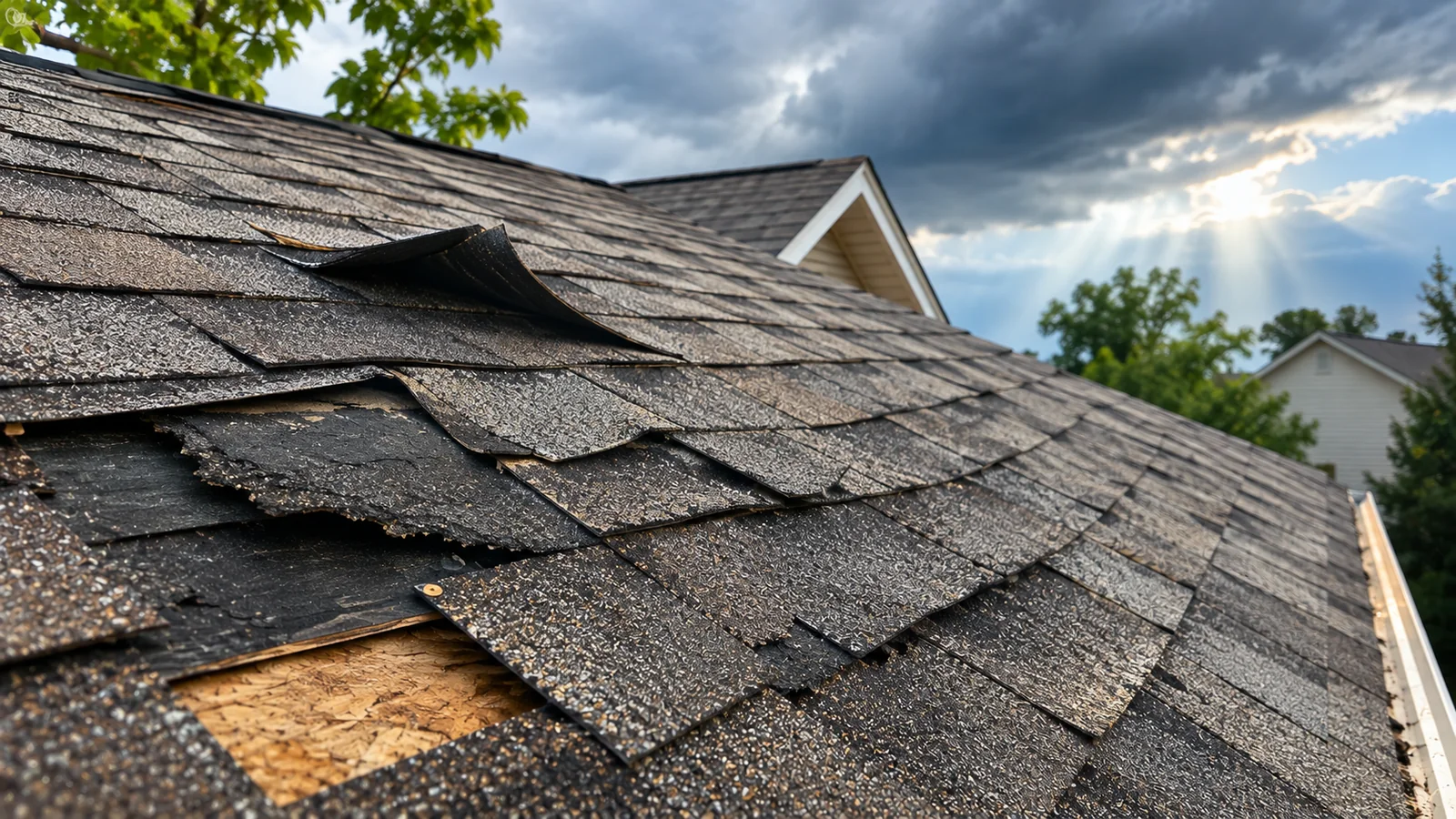
- Descriptions of tears, creases, missing material, impact-related conditions, flashing defects and other observed damage, without labeling every mark as storm damage.
- Assessment of seal condition, fastening and leak pathways, explaining how the findings support or weaken a proposed cause.
- Prior inspection photos, maintenance records and invoices, plus the date you first noticed leaks or exterior changes.
IBHS shingle-durability research identifies sealant strength as important to wind resistance, particularly after hail impact. That supports examining how components performed—not assuming a nearby storm proves the cause.
Preserve original photo files and temporary-repair receipts. Ask professionals to document conditions before altering them when safely possible. Do not postpone necessary protection just to preserve evidence.
Use local weather records as context, not proof
The National Weather Service St. Louis event archive is a useful starting point for researching the reported loss date. It covers significant or widespread events, including hail and wind impacts; it is not a complete roof-damage inventory.
For a property in St. Charles, check the reported location carefully. A report elsewhere in St. Charles County—or in St. Louis city—is not an observation at your address. Match available weather information to your timeline and property-specific findings. An absent archive entry also does not establish that no damaging weather occurred.
Our St. Charles roofing service page provides a local starting point for arranging an assessment without treating regional storm activity as a coverage decision.
Request clarification or a focused reinspection
Submit a concise written request with the claim number, disputed finding and new supporting documents. For example: Please explain how the inspection accounted for the documented damage on the west slope. Attached are labeled photographs and a contractor's report. Would you review these findings and advise whether reinspection is appropriate?
Ask what additional evidence is needed, how to submit it and when to expect a response. A contractor may explain physical conditions and proposed construction work; that is different from negotiating coverage on your behalf.
Request a written estimate that explains whether roof repair is feasible or why roof replacement is proposed. It should identify materials, affected areas, installation work and assumptions about concealed damage. A broader construction recommendation does not automatically establish an insured loss.
Reinspection is a request, not a guaranteed outcome. Confirm whether any deadlines continue while review is pending rather than assuming they stop.
Know what a Missouri insurance complaint can accomplish
The Missouri Department of Commerce and Insurance advises contacting the insurer or agent first. If the response remains unsatisfactory, its insurance complaint page offers online filing and a downloadable form. The Insurance Consumer Hotline is 800-726-7390.
Prepare a factual chronology and relevant records: the denial, policy information, correspondence, inspection findings and estimates. Explain the unresolved question and the response you want, such as clarification of the cited exclusion or consideration of submitted evidence.
DCI can forward the complaint, require an insurer response and review compliance with Missouri insurance law and policy requirements. It cannot establish disputed facts, determine claim value or the amount owed, give legal advice or intervene in a pending lawsuit.
A complaint is therefore not a substitute for resolving a technical cause dispute or obtaining legal advice. If policy interpretation or legal rights remain disputed, consult a qualified Missouri attorney. Neither a complaint nor a contractor report guarantees that the denial will change.
Homeowner Questions
Frequently asked questions
Does an older roof automatically make a storm claim invalid?
Do not draw that conclusion from age alone. Ask whether the insurer's finding concerns deterioration, the cause of damage or a roof-specific policy limitation. An inspection can document physical conditions, while the insurer explains its coverage determination. Installation and maintenance records can help establish the roof's history.
Will a hail report near my home overturn the denial?
Not by itself. A nearby report provides weather context, not proof of damage at your address or coverage under your policy. Pair it with dated property photographs, a loss timeline and technical findings. Avoid claiming a specific hail size struck your roof unless you have evidence supporting that statement.
Can Gray Summit Roofing appeal the claim for me?
Gray Summit Roofing can document construction conditions and prepare a written estimate. It does not act as your public adjuster or attorney, interpret policy provisions or promise approval. You can submit its documentation to the insurer and request an explanation or further review yourself.
Should I wait for the insurance dispute before addressing a leak?
Do not leave active damage unprotected while waiting. Contact the insurer promptly about necessary mitigation and arrange professional temporary protection. Keep photographs and receipts, and discuss permanent repairs before proceeding. Stay off the roof and away from water near electrical equipment; unsafe areas require qualified professional help.
Can Missouri DCI order my insurer to replace the roof?
A complaint does not guarantee that result. DCI can require an explanation and review compliance, but its stated limits include establishing disputed facts and claim value. A disagreement about whether conditions came from hail, aging or another cause may still need additional technical evidence or independent legal guidance.
Helpful sources
Get a documented roof assessment, not an approval promise
Gray Summit Roofing LLC serves Greater St. Louis from 3132 W Osage St, Pacific, MO 63069. Call 314-886-1489 or request a documented inspection and written estimate for your St. Charles property. Bring the denial and available photographs so the assessment can focus on the construction questions that remain unresolved.