
How Much Does a New Roof Cost in Ballwin, Missouri?
New roof cost in Ballwin, MO depends on measured roof area, material choice, installation complexity and what removal reveals beneath the existing covering. A dependable budget starts with a documented inspection and a written, property-specific estimate—not a price inferred from living-space square footage.
For homeowners in this part of Greater St. Louis, the decision is also about lasting value. NWS St. Louis weather reviews document regional hail and damaging winds. Those hazards make installation details worth evaluating alongside appearance, without assuming any particular home has storm damage.
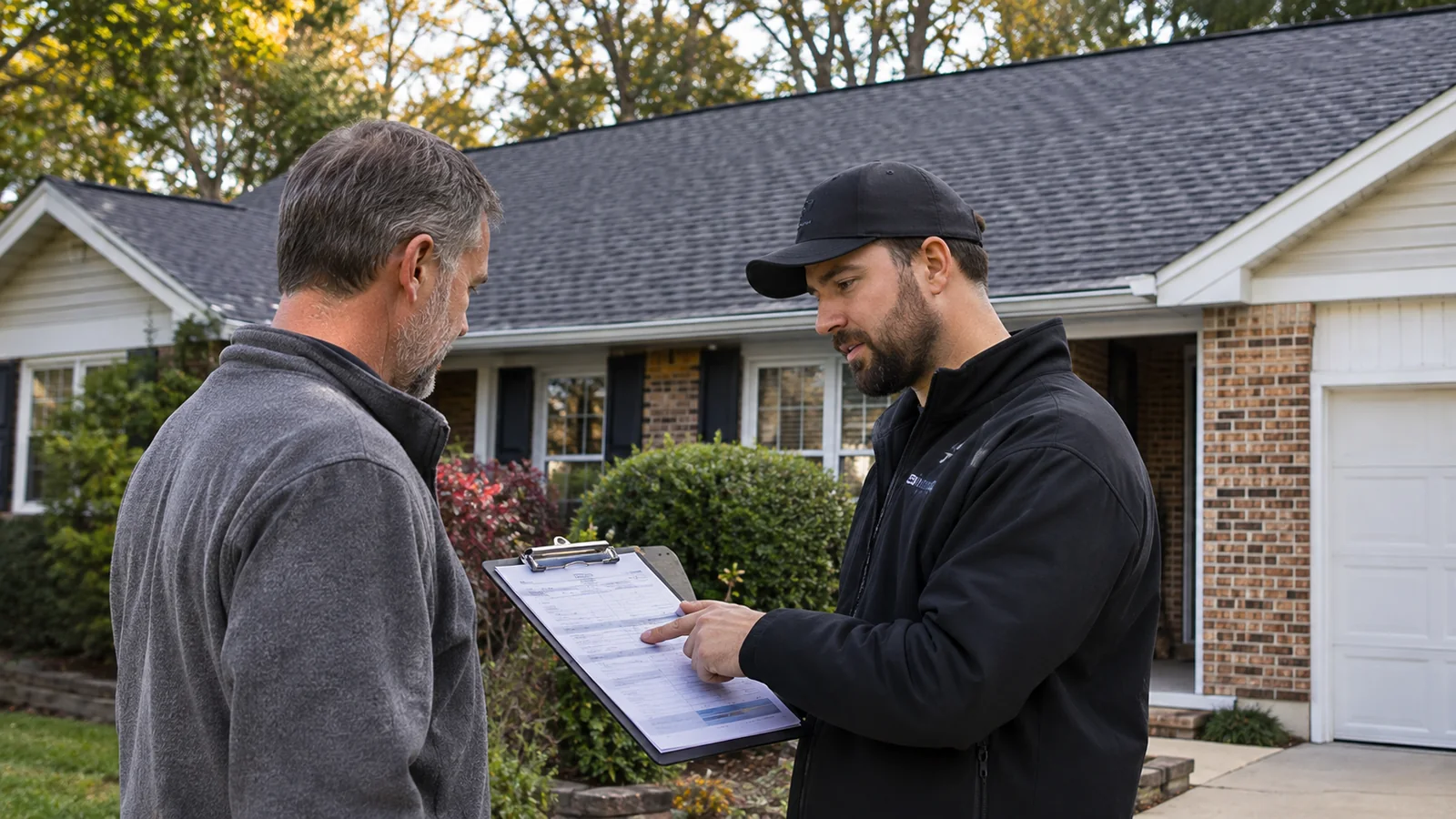
Start with roof dimensions, not floor square footage
Living-space square footage is not roof surface area. A two-story home's floors overlap beneath its roof; an attached garage adds roof area without adding living space. Pitch, overhangs, dormers and intersecting roof sections change measurements and material needs. Valleys and complicated layouts also require cutting and careful water-shedding details.
A useful estimate separates measured roof area from material allowances for cuts and layout. It should identify steep sections, access limitations, tear-off, disposal and protection of landscaping. Current product availability and installation demands belong in the estimate, too.
Existing layers affect removal work. Tear-off also allows assessment of the roof deck—the wood surface supporting the covering. Some deterioration remains concealed until removal. Ask what can be assessed beforehand, what remains uncertain and how newly exposed damage will be photographed and handled through a written change order. Do not assume an overlay is compatible or permitted simply because it avoids removal.
Decide whether replacement is necessary first
A leak is a symptom, not an automatic replacement order. A localized flashing defect or damaged roof section may be repairable when surrounding materials remain serviceable. Flashing directs water away from joints, walls and penetrations. An inspection should trace the entry point rather than treating the ceiling stain as the repair location.
Compare roof repair with replacement when deterioration is widespread, leaks recur or compatible repairs become difficult. Ask what the proposed repair addresses, what remains unresolved and which findings justify replacing the entire covering.
Repeated patches are not necessarily economical, but neither is replacing a sound roof for one isolated defect. Request photographs and an explanation of the alternatives. Observe only from safe ground or interior locations; leave roof access and temporary tarps to professionals. Keep away from wet electrical equipment and sagging ceilings.
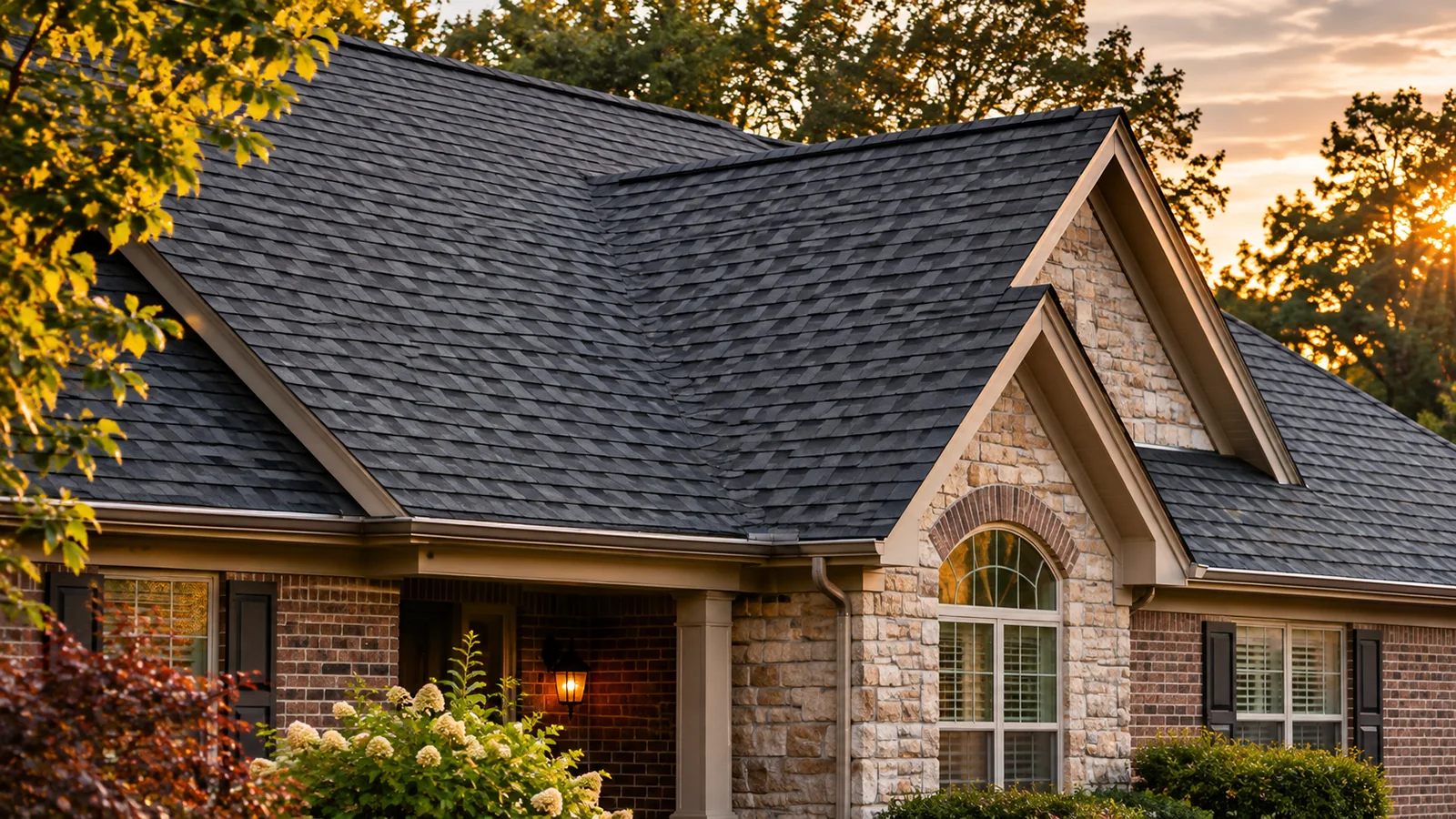
Compare materials as systems, not labels
Basic asphalt shingles: Three-tab shingles have a flatter, single-layer profile. Where a suitable product is available, they can be a budget-oriented option. Compare its installation requirements and written warranty with alternatives rather than assuming every asphalt product performs alike.
Architectural shingles: These are also asphalt shingles, not a separate material family. Their laminated layers create a dimensional appearance. Product-specific ratings and warranty conditions matter more than the word architectural. Our guide to roof shingle types for Missouri homes provides additional comparison context.
Metal roofing: Standing seam and exposed-fastener systems have different attachment and maintenance requirements. McElroy Metal's homeowner guide explains why panel profile, coating, fastening and future maintenance belong in the comparison. Metal is not automatically maintenance-free or the best lifetime value for every owner.
For any choice, confirm suitability for each roof section's slope, deck and transitions. A low-slope porch may need a different covering from the main roof. Ask how penetrations, adjoining materials and attic conditions will be addressed before selecting a color.
Fund essential details before cosmetic upgrades
A roof budget should first support a sound deck and a compatible water-shedding assembly. The replacement scope should explain underlayment, flashing, edge details, starter materials and ridge treatment appropriate to the selected system. These components deserve attention even though many disappear beneath the finished covering.
Attic conditions also need evaluation. In a vented assembly, adding exhaust vents without considering intake is not a complete plan. Have the contractor explain the ventilation approach and manufacturer requirements rather than promising that more vents will solve every moisture problem.
Once essential work is defined, compare elective appearance upgrades separately. A designer profile or special color may be worthwhile to you, but it should not displace necessary deck repairs or flashing work. Performance upgrades are a separate discussion: request the exact product rating and its limitations.
Keep a contingency for concealed conditions. Agree beforehand on documentation, approval and the method for pricing additional work, so a discovery does not become an unexplained addition to the bill.
Use staged decisions without leaving the roof incomplete
Hypothetical repair-first decision: An inspection identifies one failed pipe flashing while surrounding shingles remain serviceable. The owner chooses a documented repair, keeps the inspection record and schedules reassessment if symptoms return. This is an example, not a diagnosis of any Ballwin home.
Hypothetical replacement decision: Widespread deterioration supports replacement, but deck condition is partly concealed. The owner funds the required assembly and a repair contingency first, then declines an optional designer appearance upgrade. Necessary construction remains a complete project rather than being postponed to afford premium cosmetics.
Hypothetical long-term ownership decision: An owner compares architectural asphalt with standing seam metal. Instead of assuming metal wins, the owner evaluates installation scope, foreseeable maintenance, repair access and expected ownership horizon. Staging means separating decisions and optional projects—not leaving underlayment exposed or knowingly deferring work needed to keep water out.
Compare what each bid delivers over time
The NRCA consumer resources recommend detailed proposals covering materials, removal, flashing, ventilation, installation and warranties. If bids differ substantially, ask each contractor to explain the difference before ranking them.
- Are the roof measurements, removal assumptions and deck-repair procedures comparable?
- Are product names and installation details specified, including any separate low-slope areas?
- What cleanup, property protection and completion documentation are included?
- What do the manufacturer and workmanship warranties each cover or exclude?
Ask what maintenance the chosen system needs and which conditions could shorten its service. Keep roof maintenance in the lifetime-value comparison. A lower initial bid is not equivalent value if it omits necessary work; a higher bid is not automatically better without identifiable benefits.
Homeowner Questions
Frequently asked questions
Can I get an accurate estimate from my home's listed square footage?
Not by itself. Living area does not describe roof slope, garage coverage or layout. Supply any existing inspection records, then request roof measurements and an assessment of access, layers and visible deck conditions. The estimate should state assumptions that cannot be confirmed until tear-off.
Is architectural asphalt a different material from regular asphalt shingles?
No. Architectural shingles are laminated asphalt shingles with a dimensional profile. Compare exact products, not just categories. Check installation requirements, available ratings and warranty exclusions; appearance alone does not establish how a completed roof will perform.
Will choosing metal eliminate future roof maintenance?
No. Metal systems still need attention to drainage, flashings, penetrations and damage. Exposed-fastener systems add fastener and sealing-washer inspection needs. Ask for the selected manufacturer's maintenance guidance and arrange professional roof-level inspections rather than climbing onto the roof yourself.
What happens if damaged wood is found after shingles are removed?
The contractor should document the condition and explain necessary corrective work. Your agreement should define how additional scope is priced and approved. A contingency provides flexibility, but it is not permission for undocumented work or a substitute for correcting an unsuitable deck.
Can insurance change what I pay for a new roof?
Possibly, when damage is covered. Missouri DCI guidance distinguishes replacement-cost coverage from depreciated actual cash value. Review deductibles, exclusions and settlement conditions with your insurer. A roofer can assess and document construction damage; the insurer decides coverage. No inspection guarantees claim approval.
Helpful sources
Build your Ballwin roof budget from documented findings
Ask Gray Summit Roofing LLC for a documented inspection and written estimate that separates essential work from optional upgrades. Call 314-886-1489. Based at 3132 W Osage St, Pacific, MO 63069, Gray Summit Roofing serves Greater St. Louis.